Waymo Expands Autonomous Vehicle Testing at Airports, Strikes Deal for City Transit Integration
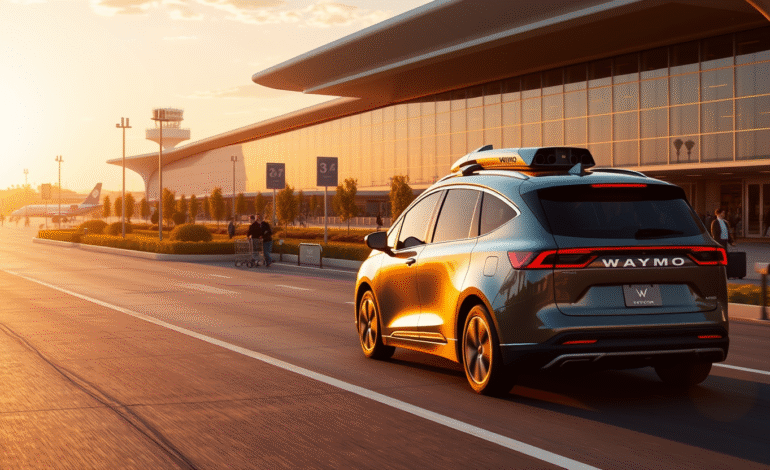
Autonomous vehicle technology is no longer a race but a long-term, complex journey towards commercialization. This realization has become evident as the industry moves away from high-speed competition and focuses on proving the technology’s efficacy and profitability.
The recent developments in this sector have shed light on specific battlegrounds within cities, particularly airports and public transit systems. These areas are critical for ride-hailing companies and their autonomous vehicle counterparts, such as Waymo.
Waymo is making significant strides in the autonomous vehicle market by securing testing permits at major airports like San Francisco International Airport and San Jose Mineta International Airport. This expansion comes as Tesla also seeks to offer ride-hailing services at these airports.
In an effort to further penetrate the market, Waymo has partnered with transit software company Via. Through this collaboration, cities using Via’s public transit software will be able to seamlessly integrate Waymo’s robotaxis into their existing networks. The first city to implement this new service is Chandler, Arizona, through its Chandler Flex fleet of on-demand, shared vehicles.
While the immediate financial impact may not be substantial for Waymo, this partnership represents a significant expansion in reach and could potentially involve hundreds of cities in the future.
In other news, U.K.-based startup Wayve continues to garner attention for its innovative approach to automated driving technology. The company recently secured a significant investment from Nvidia, which has expressed interest in participating in Wayve’s upcoming Series D round.
Other notable deals include Divergent Technologies’ $290 million fundraising for the production of missile parts and specialized components for the military, and EV Realty’s $75 million investment to build charging hubs throughout California.
Hyundai Motor Group has announced ambitious plans to increase its annual sales from 4.17 million in 2025 to 5.55 million by 2030. To achieve this goal, the company will invest heavily in North America, with a particular focus on electrified vehicles that are expected to account for 60% of total sales.
Rivian has officially broken ground on its factory near Atlanta, and Stellantis has scrapped plans for the all-electric Ram 1500 REV pickup truck due to low demand. Tesla, meanwhile, is addressing concerns about inoperable door handles on some of its models by redesigning them.
In Australia, Tesla has recalled Powerwall 2 home batteries after reports of fires causing minor property damage. Uber is planning to test drone deliveries for Uber Eats in select U.S. markets by the end of this year as part of a partnership with Israeli startup Flytrex.
Waymo aims to launch a commercial robotaxi service in Nashville in 2026 and has partnered with Lyft to expand its reach. Alex Kendall, co-founder and CEO of another autonomous vehicle technology startup, Wayve, will be speaking at TechCrunch Disrupt 2025. The event will take place October 27-29 at Moscone West in San Francisco.