Revolutionary Metal Can Battery in iPhone Air Enables Energy-Dense Design Breakthrough for Electronics and Future Devices
In an intriguing development within the realm of mobile technology, Gene Berdichevsky, CEO of battery materials manufacturer Sila, has highlighted a significant advancement hidden within the sleek design of the latest iPhone model. While the device’s slim profile and compact logic board are undeniably impressive, it is the revolutionary battery technology that could truly redefine industry standards.
Berdichevsky, who previously led engineering on the original Roadster’s battery at Tesla, recently returned from Asia where he had a chance to examine the innovative cells powering the new iPhone. He described the battery as nothing short of remarkable, praising its unconventional shape and the groundbreaking technology behind it.
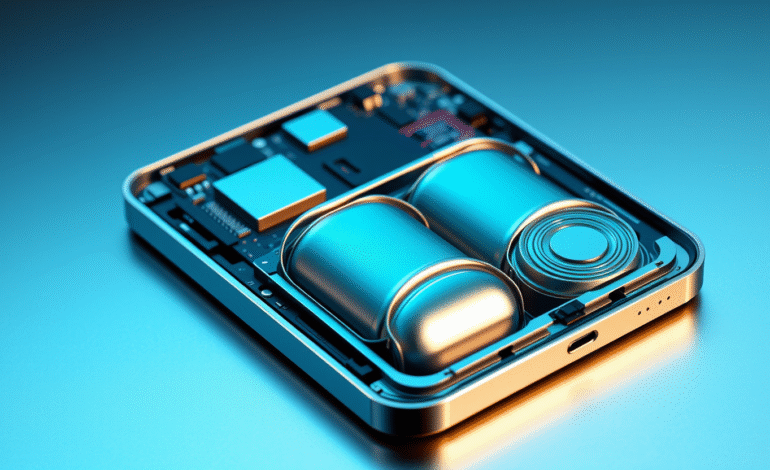
The key to this advancement is Apple’s patented metal can battery technology. This innovative design features a robust metal casing that encases the entire cell, enhancing both strength and physical durability. In contrast, most consumer electronics batteries are pouch cells, which have a flexible plastic casing that allows for some degree of expansion due to swelling.
Apple has been using L-shaped batteries in iPhones for years, a design necessitated by the swelling of lithium-ion batteries. The interior corner of the L becomes a potential weakness during this swelling process. However, the metal can battery eliminates such vulnerabilities, allowing for greater flexibility in battery shape and placement within devices.
This technology allows Apple to maximize the limited space within the iPhone, ensuring efficient use of every millimeter. According to Berdichevsky, the battery can now be positioned close to the device’s edges, filling whatever available space remains after the circuit boards have been installed.
Berdichevsky believes that this technology could become standard in smartphones due to its enhanced energy storage capabilities. He also emphasized its potential for smaller devices like augmented reality and virtual reality glasses, as it allows for even more energy density improvements and the ability to fit into unusual shapes.
Despite this breakthrough, Apple has yet to switch from carbon anodes in their lithium-ion batteries to silicon-heavy versions, also known as silicon-carbon. However, Berdichevsky suggests that the transition to metal can construction could pave the way for such a change in the near future. Pure silicon anodes can store around 50% more energy than traditional graphite anodes, but managing swelling remains a challenge. Companies like Sila are developing proprietary methods to address this issue at both the material and cell levels.
Berdichevsky is optimistic about the potential for these advancements, stating that they will help introduce silicon in various devices, enabling manufacturers to push performance limits further while managing swelling more effectively. This, he believes, could mark a truly revolutionary shift in battery technology.